Skip to content
Wild monkey guide

Where to See Monkeys in Costa Rica

Four species, and you'll usually hear them before you see them. Here's where to find each one, town by town, and the local guides and operators who know their troops, compared and ranked.

By Lior, wildlife photographer and guide from Guanacaste

Reserve with a 25% deposit on secure WeTravel checkout · Refundable up to 60 days before trips, 48 h before day tours

The short answer

Where
Manuel Antonio, Osa, Tortuguero, Guanacaste
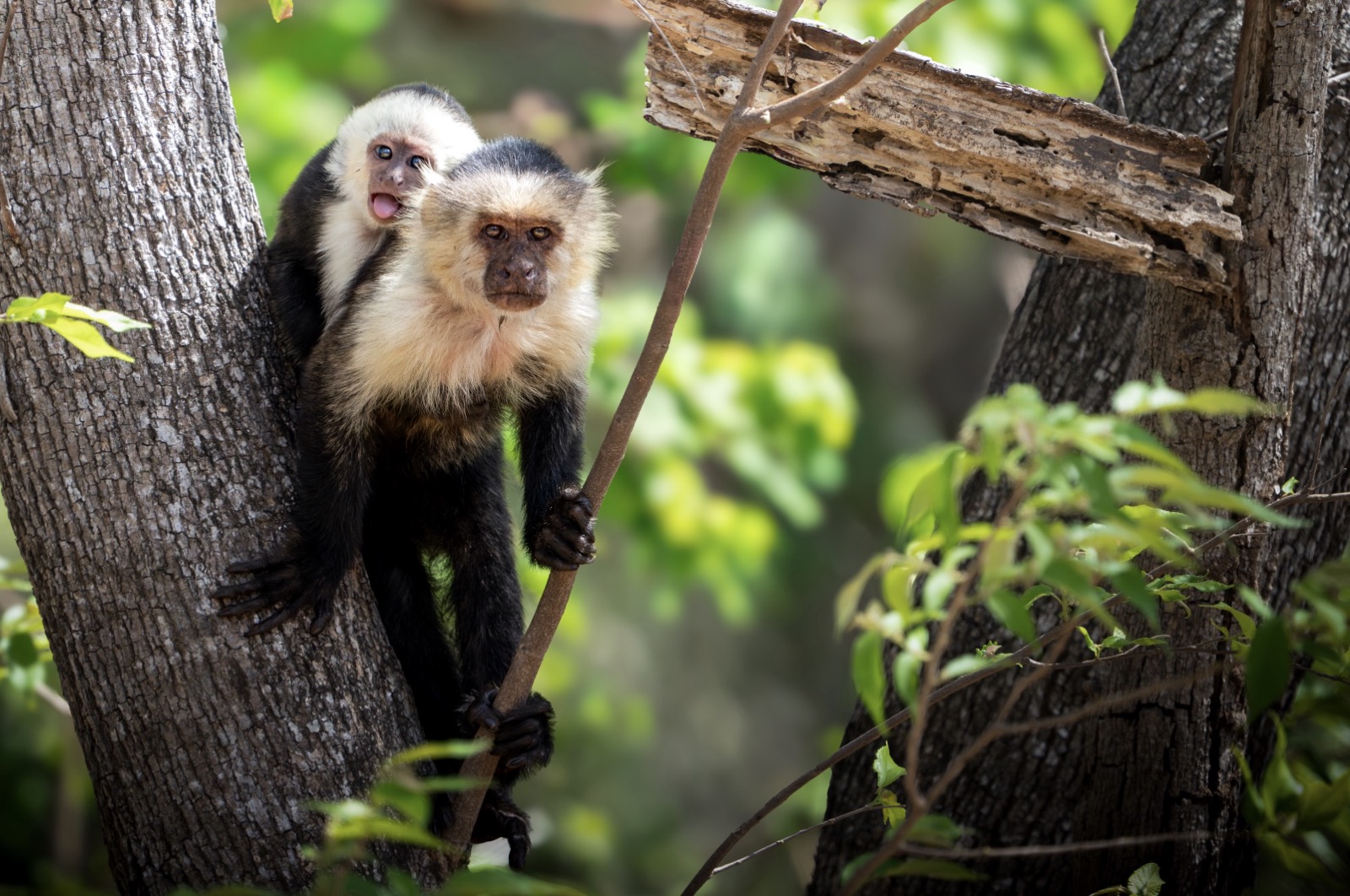
Howlers and capuchins live almost everywhere
When
All year, best at dawn
Howlers start calling before sunrise
How many species?
Four
Howler, capuchin, spider and squirrel monkey
Can you feed them?
No
It's banned in national parks and makes monkeys aggressive.

Lyferr is a marketplace

We don’t run tours. Licensed local guides and operators list them, we rank them openly, and you reserve through Lyferr’s secure checkout on WeTravel.

How it works

Sighting odds

How likely you are to see them, spot by spot

Some places give you very good odds of monkeys. Others take luck. Here's the honest picture for every spot on the map.

SpotChance
Manuel AntonioCentral PacificWhite-faced capuchin, Mantled howler, Squirrel monkeyAlmost certain
CorcovadoOsa PeninsulaAll four speciesAlmost certain
CahuitaSouth CaribbeanMantled howler, White-faced capuchinAlmost certain
TortugueroNorth CaribbeanMantled howler, Spider monkey, White-faced capuchinLikely
Santa RosaGuanacasteMantled howler, White-faced capuchin, Spider monkeyLikely
NosaraNicoya PeninsulaMantled howler, White-faced capuchinLikely
CurúNicoya PeninsulaMantled howler, White-faced capuchinLikely
MonteverdeCloud forestMantled howler, White-faced capuchinGood chance

Our local guides' estimate for a half-day guided walk. As guests report what they saw on Lyferr tours, these become measured rates.

Each tour page shows what guests actually saw, once reports come in.

Compare monkey tours

Town by town

Are there monkeys where you're staying?

Species expert program

Find a certified Monkey Expert

Lyferr certifies guides one species at a time. A Monkey Expert has the strongest proven record on Lyferr for finding and photographing monkeys, which makes them your best odds for a good sighting and a good shot.

  1. 175+ logged monkey tripsCounted on Lyferr for this species only, not for wildlife tours in general.
  2. 290%+ composite scoreSighting success, cross-checked with public sighting records, weighted with traveller ratings of the guide's species knowledge.
  3. 3Earned species by speciesA guide can hold several badges. Each one is earned on its own and kept once earned.

How guides move up, one species at a time

  1. 01EmergingUnder 20 trips
  2. 02Skilled20+ trips · 60%+ score
  3. 03Specialist40+ trips · 75%+ score
  4. 04Species Expert75+ trips · 90%+ score
Founding experts

At launch, we award Founding Expert badges to guides with several years of premium tours focused on this species. Each one is confirmed or removed once the guide has logged 20 trips on Lyferr. After that, the badge is earned with logged trips and score.

No guide can promise a sighting. The badge shows the strongest track record for this species, not a guarantee.

See Monkey Expert guides

Day tours from local guides

Compare monkey tours from local guides

Day tours run by independent local guides, all held to the no-touch, no-feeding standard.

Ranked by sighting success, verified reviews and licence

Monkeys tours from local guides are being added. Tell us your dates and where you’re staying, and we’ll match you with a guide.

Ask Lyferr
  • Clear refunds

    up to 60 days before trips, 48 h before day tours, on every booking made through Lyferr. Booking fee (11% of the price) excluded.

  • Reserve with 25%

    secure checkout on WeTravel, the rest paid before your tour

  • Group size, upfront

    every listing shows its maximum group size

  • Your guide, confirmed

    guide's name and WhatsApp arrive in your booking confirmation

  • Real reviews

    only travellers who booked can review

How booking works

  1. 1Pick a tour or trip on Lyferr
  2. 2Choose your date and pay the 25% deposit on WeTravel
  3. 3The guide confirms within 24 h. Their WhatsApp arrives with your confirmation

Prices are set by each guide. The 25% deposit includes Lyferr’s booking fee (11% of the price), shown before you pay. Each card opens the tour’s booking page on WeTravel.

When to go

When is the best time to see monkeys?

Any month, early in the day. Monkeys are most active from sunrise to mid-morning and again in the late afternoon. Howlers often start calling before dawn, which makes them easy to find. In the dry season (December to April) the Guanacaste forest loses its leaves and monkeys are easier to see.

Why a guide matters

How guides find all four species

You'll hear howlers on your own. Guides help you see all four species, closer and safer, by:

  • Knowing each troop's territory and the trees they feed in that month.
  • Reading the calls: capuchin alarm calls often mean a snake or a hawk nearby.
  • Keeping the group at a safe distance, especially from capuchins looking for food.
  • Carrying a spotting scope for spider monkeys high in the canopy.

Not sure where to go? Send us your dates and where you're staying, and we'll suggest the right guide.

Ask Lyferr a question
FOR PHOTOGRAPHERS

Best light is 5:30 to 8:30 am, which is also when monkeys are most active.

Ethical wildlife watching

Wild monkeys, not handouts

Are monkeys dangerous in Costa Rica?

Rarely. Monkeys avoid people unless they've learned to expect food. Capuchins in busy parks like Manuel Antonio may grab bags or snacks, so keep food sealed and out of sight. Bites are rare, but any bite or scratch needs a doctor the same day.

Howlers are harmless, but they do drop things from the trees, urine included. Don’t stand right underneath a troop.
Short answer: no

Can you feed or touch monkeys?

No. Feeding wild animals is banned in Costa Rica's national parks and can bring a fine. Fed monkeys lose their fear of people, get aggressive, and get sick from human food.

The same goes for holding or posing with monkeys. Costa Rica's Stop Animal Selfies campaign asks visitors not to touch, hold or pose with wild animals. If anyone offers you a photo with a monkey, it's not a wild animal living a normal life. Say no and report it.

See monkeys in the wild, with a guide who keeps the distance

Find a no-touch guide

The sound of the forest

What's that roaring at dawn?

That's a male howler monkey. Howlers call at dawn, at dusk and before rain to tell neighbouring troops where they are. The roar carries a long way through the forest, which is why it's often the first wildlife you notice in Costa Rica.

Capuchins chatter and give sharp alarm calls, spider monkeys whinny like small horses, and squirrel monkeys chirp constantly as the troop moves.

Mornings are when monkeys are loudest and most active.

See morning walks

Not booking yet?

Take the monkey spotting checklist with you

One printable page: how to tell the four species apart, the 10 spots, the best time of day and the rules for keeping your distance. Sent to your inbox.

No spam. One email with the PDF.

Monkey facts people ask about

  • 4monkey species live in Costa Rica
  • Dawnis when howlers call loudest
  • Dozensof squirrel monkeys move together in one troop
  • Tailspider monkeys use it like a fifth hand
  • Congois the howler monkey's name in Costa Rica

Who wrote this

Lior, founder of Lyferr

Wildlife photographer and guide who grew up in Guanacaste, and a finalist in the Sony World Photography Awards and Wildlife Photographer of the Year. Lior has spent years photographing Costa Rica's monkeys, from howlers in the Guanacaste dry forest to squirrel monkeys on the south Pacific. This guide is what he tells friends before they go.

  • Sony World Photography Awards finalist
  • Wildlife Photographer of the Year finalist
  • Born in Guanacaste

How we rank guides and operators

FAQ

Frequently asked questions

Are there monkeys in Costa Rica?

Yes, four species: the mantled howler, the white-faced capuchin, the Central American spider monkey and the Central American squirrel monkey.

Where can you see all 4 monkey species?

In the south Pacific: Corcovado and the Osa Peninsula have all four, and a trip that combines Manuel Antonio with Osa gives you the best chance.

What's the best place to see monkeys in Costa Rica?

Corcovado and Osa for all four species, Manuel Antonio for the easiest sightings, and Cahuita or Tortuguero on the Caribbean side.

What time of day is best to see monkeys?

Early morning, from sunrise to about 10 am, and again in the late afternoon.

Are monkeys in Costa Rica dangerous?

Rarely. Keep food sealed, keep your distance, and see a doctor the same day after any bite or scratch.

Can you feed or touch monkeys?

No. Feeding wild animals is banned in national parks and can bring a fine, and it makes monkeys aggressive.

Where can you see squirrel monkeys?

Only on the south Pacific coast: Manuel Antonio, Uvita, Dominical and the Osa Peninsula.

Why do howler monkeys howl?

To tell neighbouring troops where they are, mostly at dawn, at dusk and before rain.

What are monkeys called in Costa Rica?

Mono. The howler is the mono congo, the capuchin the mono cara blanca, the spider monkey the mono araña and the squirrel monkey the mono tití.

Does Lyferr run the tours?

No. Lyferr is a marketplace. Licensed local guides and tour operators list their tours here, and we rank them by sighting success, reviews and client experience (and photography expertise for photo tours). You book and pay the deposit through Lyferr, and the operator you choose runs the tour.