Can you touch or hold frogs?
No. Some are poisonous, and all have thin skin that absorbs sunscreen, repellent and the oils on your hands. A good guide will never hand you a frog.
Never pick up a frog for a photo, and don't move it to a nicer leaf.
About 150 frog species, from the red-eyed tree frog to see-through glass frogs and tiny poison dart frogs. Here's where to find each one, which ones you can't touch, and the local guides who run night walks, compared and ranked.
By Lior, wildlife photographer and guide from Guanacaste
Reserve with a 25% deposit on secure WeTravel checkout · Refundable up to 60 days before trips, 48 h before day tours
Lyferr is a marketplace
We don’t run tours. Licensed local guides and operators list them, we rank them openly, and you reserve through Lyferr’s secure checkout on WeTravel.
How it worksSighting odds
Some night walks give you very good odds of a red-eyed tree frog. Here's the honest picture for one walk with a local guide.
| Spot | Chance | Who you’ll likely see |
|---|---|---|
| La FortunaNorthern plainsRed-eyed tree frog, Glass frogs | Almost certain | Red-eyed tree frog, Glass frogs |
| SarapiquíCaribbean lowlandsStrawberry poison frog, Red-eyed tree frog | Almost certain | Strawberry poison frog, Red-eyed tree frog |
| Puerto ViejoSouth CaribbeanStrawberry poison frog, Green-and-black | Almost certain | Strawberry poison frog, Green-and-black |
| TortugueroNorth CaribbeanRed-eyed tree frog, Poison frogs | Likely | Red-eyed tree frog, Poison frogs |
| MonteverdeCloud forestGlass frogs, Rain frogs | Likely | Glass frogs, Rain frogs |
| Osa PeninsulaSouth PacificGranular poison frog, Golfo Dulce poison frog | Likely | Granular poison frog, Golfo Dulce poison frog |
| Manuel AntonioCentral PacificTree frogs, Glass frogs | Likely | Tree frogs, Glass frogs |
| UvitaSouth PacificRed-eyed tree frog, Granular poison frog | Good chance | Red-eyed tree frog, Granular poison frog |
Our local guides' estimate. As guests report what they saw on Lyferr tours, these become measured rates.
Each tour page shows what guests actually saw, once reports come in.
Compare night walksTown by town
Glass frogs and rain frogs on cloud forest night walks.
One of the best places for red-eyed tree frogs, on night walks every evening.
Strawberry and green-and-black poison frogs by day, tree frogs at night.
Red-eyed tree frogs and poison frogs around the lodges at night.
Strawberry poison frogs by day, red-eyed tree frogs by night.
Few in the city. Sarapiquí night walks are about 1.5 hours away.
Night tours find tree frogs, glass frogs and sleeping birds.
Red-eyed tree frogs at night, granular poison frogs by day.
Night tours near Carara find tree frogs and the odd glass frog.
Few frogs in the dry season. In the rainy months, some tree frogs at night.
Dry forest, so frogs are mostly a rainy-season thing. Plan a night walk in Arenal.
Some frogs after rain, but the famous species live on the Caribbean side.
Species expert program
Lyferr certifies guides one species at a time. A Frog Expert has the strongest proven record on Lyferr for finding and photographing frogs, which makes them your best odds for a good sighting and a good shot.
At launch, we award Founding Expert badges to guides with several years of premium tours focused on this species. Each one is confirmed or removed once the guide has logged 20 trips on Lyferr. After that, the badge is earned with logged trips and score.
No guide can promise a sighting. The badge shows the strongest track record for this species, not a guarantee.
See Frog Expert guidesDay tours from local guides
Day tours run by independent local guides, all held to the no-touch, no-feeding standard.
Ranked by sighting success, verified reviews and licence
Frogs tours from local guides are being added. Tell us your dates and where you’re staying, and we’ll match you with a guide.
Ask Lyferrup to 60 days before trips, 48 h before day tours, on every booking made through Lyferr. Booking fee (11% of the price) excluded.
secure checkout on WeTravel, the rest paid before your tour
every listing shows its maximum group size
guide's name and WhatsApp arrive in your booking confirmation
only travellers who booked can review
Prices are set by each guide. The 25% deposit includes Lyferr’s booking fee (11% of the price), shown before you pay. Each card opens the tour’s booking page on WeTravel.
Which frog is that?
The frogs people ask about most, sorted by what you noticed first. Each tag says if it's poisonous.
Caribbean lowlands, Arenal
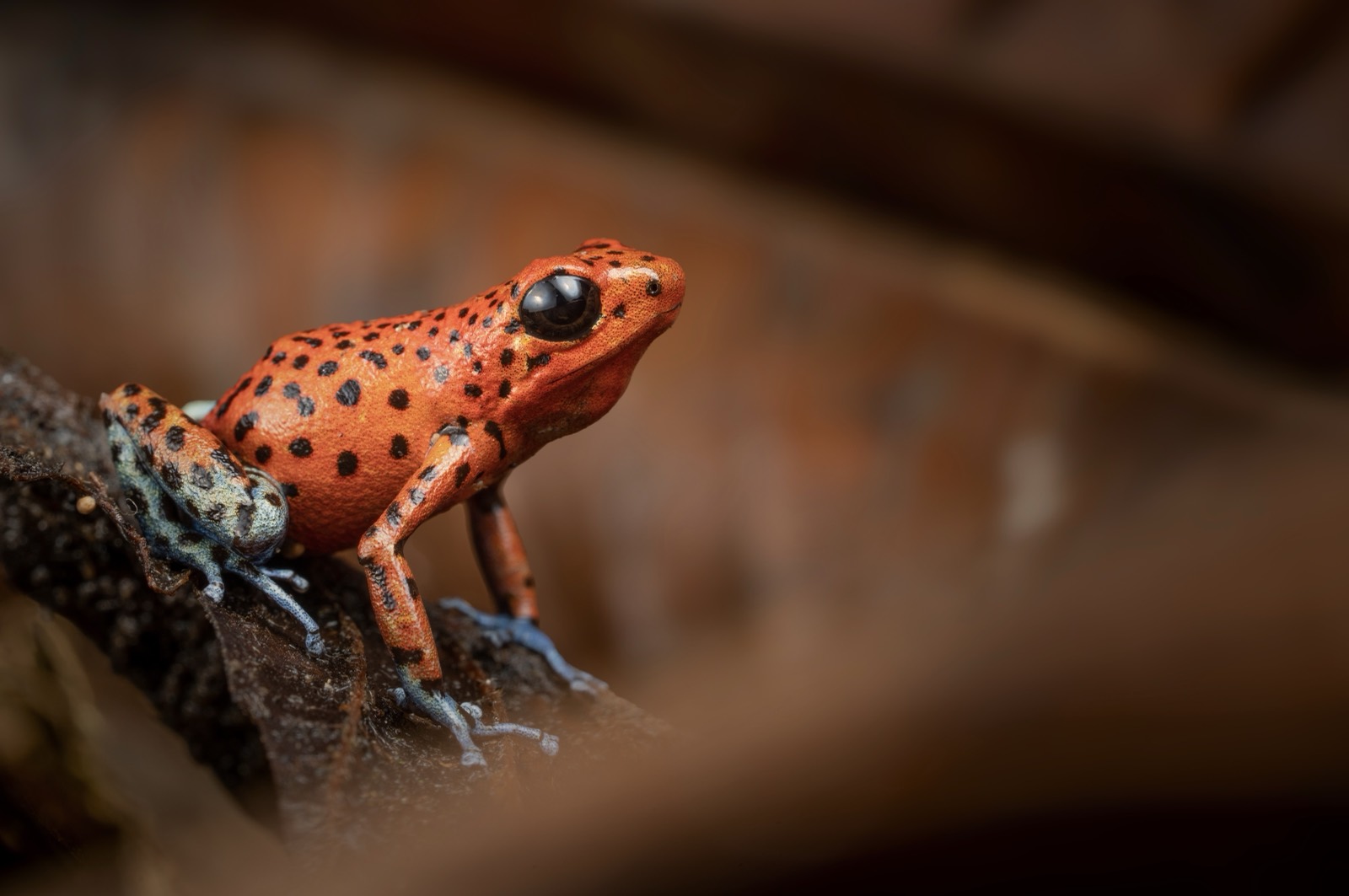 Poisonous
Caribbean side
Caribbean and south Pacific
South Pacific only
Osa and Golfo Dulce, endemic
Caribbean lowlands
Caribbean foothills
Streams, Caribbean and south Pacific
Streams across the country
Caribbean lowlands
Lowlands, often near houses
Everywhere, even in town
Not in Costa Rica: the golden poison frog (Colombia) and the coquí (Puerto Rico).
Want names for every frog you saw? Book a night walk.
Compare night walksWhen to go
Any evening of the year, and best in the rainy season from May to November, when frogs call and breed after rain. Tree frogs come out after dark; poison frogs are the exception and hop around the leaf litter by day.
Why a guide matters
You'll hear frogs on your own. A good guide shows you the ones calling by:
Not sure where to go? Send us your dates and where you're staying, and we'll suggest the right guide.
Ask Lyferr a questionBest time is the first two hours after dark, when frogs are calling and sitting still.
Ethical wildlife watching
No. Some are poisonous, and all have thin skin that absorbs sunscreen, repellent and the oils on your hands. A good guide will never hand you a frog.
Never pick up a frog for a photo, and don't move it to a nicer leaf.
A short, diffused flash for a photo is fine. A bright torch held on a frog for minutes is not: use red or dim light.
Never pay to hold or pose with a frog. Real rescue centres don't offer it.
Book a night walk with a local guide
Find a no-touch guideThe sound of the forest
Most of the night chorus is frogs. Males call to attract females, loudest after rain, and every species has its own call.
Red-eyed tree frogs give a short "chock", strawberry poison frogs buzz like insects by day, and some glass frogs whistle from leaves over streams.
Evenings after rain are the loudest.
See night walksNot booking yet?
One printable page: the 20 frogs you're most likely to see, which ones are poisonous, and where to find them. Sent to your inbox.
Who wrote this
Wildlife photographer and guide who grew up in Guanacaste, and a finalist in the Sony World Photography Awards and Wildlife Photographer of the Year. Lior has spent years photographing Costa Rica's frogs on night walks, from red-eyed tree frogs in Arenal to poison frogs on the Caribbean coast. This guide is what he tells friends before they go.
FAQ
About 150, including five poison frogs, over a dozen glass frogs and the red-eyed tree frog.
No. Lyferr is a marketplace. Licensed local guides and tour operators list their tours here, and we rank them by sighting success, reviews and client experience (and photography expertise for photo tours). You book and pay the deposit through Lyferr, and the operator you choose runs the tour.
On night walks in La Fortuna, Sarapiquí, Monteverde and Tortuguero, and on day trails around Puerto Viejo for poison frogs.
Any month, at night. The rainy season from May to November is the most active.
After dark, especially in the first hours after rain. Poison frogs are active by day.
Group night walks cost about $30 to $60 per person and last about two hours. Every tour on Lyferr shows its price before you book.
No. The golden poison frog lives in Colombia and the coquí in Puerto Rico. Neither lives wild in Costa Rica.
Costa Rica's poison frogs are mildly to moderately toxic. Touching one is unlikely to hurt you badly, but it can irritate cuts and eyes, and it harms the frog. Don't touch.
No. Its bright colours are a bluff to startle predators. Still, don’t touch it: your skin oils and sunscreen harm it.
Rana. The red-eyed tree frog is the rana calzonuda, and glass frogs are ranas de vidrio.
Keep exploring
Most trips combine two or three of these. Each guide covers where, when and the local guides who know them.
 BirdsOver 900 species, 10 hotspotsWhere to see them
 Hummingbirds50+ species and how to shoot themWhere to see them