Can you see Andean bears in Guasca?
Sometimes. Guasca is the gateway to the Siecha sector, and bears use the forest edges around the valley. Sightings are rare without a guide.
· 8 min read · Updated October 2026
The Andean bear, South America's only bear, lives in the high forest and páramo of the Colombian Andes. It's shy and hard to see, and most visitors to Chingaza go home without one. Here's where, when and with whom your chances are best.
By Lior, wildlife photographer and guide from Guanacaste
WHERE
Chingaza National Park, above Bogotá
Páramo and high Andean forest, roughly 2,800 to 3,700 m
WHEN
All year, drier December to March
Bears feed most from 6 to 10 am. Sleep in the park to be out at first light
HOW LIKELY?
Low
Most day visitors don't see one. Two or three days with a specialist guide give you a real chance.
ARE THEY ENDANGERED?
Vulnerable
Habitat loss, conflict over cattle and road deaths are the main threats.
The honest answer
They're shy and spread thin. A camera trap study around Chingaza counted about 3 bears per 100 km², so most walks turn up sign, not a bear. When you do see one it may be across a valley or close to the trail. Three things change the odds: how long you stay, where you look and who you go with.
A single day trip
Day visitors enter from 7 am, after the best feeding hours, and leave by 4 pm. Many go home with tracks and torn plants, not a bear.
Compare day trips2 to 3 nights in the park
Best chanceStaying at Monterredondo puts you on the slopes at dawn, morning after morning. That's what gives you a real chance, never a guarantee.
Compare multi-day tripsA specialist guide
Makes the differenceGuides who follow fresh feeding sign and carry a scope find far more bears than a walk on your own. That's what the Andean Bear Expert badge recognises.
Find an Andean Bear ExpertWant a photo? Bring a long lens: many bears are seen across a valley, a few much closer.
Photography guideANDEAN BEAR TOURS FROM LOCAL GUIDES AND OPERATORS
Multi-day trips put you in two or three Andean bear areas. Short on time? Switch to day tours.
No Andean bear tours listed yet
We only list guides who pass our checks, and none of them runs Andean bear tours yet. Tell us your dates and we'll match you with a local guide as soon as one joins.
Ask a local guideup to 60 days before trips, 48 h before day tours, on every booking made through Lyferr. Lyferr's commission is not refunded.
secure checkout on Lyferr, the rest paid before your tour
every listing shows its maximum group size
guide's name arrives with your confirmation and you message them in Lyferr
only travellers who booked can review
HOW BOOKING WORKS
Pick a tour or trip on Lyferr
Choose your date and pay the 25% deposit on Lyferr
The guide confirms within 24 h. You message them in Lyferr
Prices are set by each guide. The price you see is final. Lyferr's commission comes out of the guide's price, not on top. Each card opens the tour's page on Lyferr.
LYFERR IS A MARKETPLACE
We don't run tours. Independent local guides and operators list them, we vet every one and show each record openly, and you reserve through Lyferr's secure checkout.
How it worksANDEAN BEAR GUIDES
We invite guides with years of work built around Andean bears and review each one before they're listed. The first Andean bear guides show here as they join.
Are you an Andean bear guide?
Species expert program
Lyferr is new, so we don't rank guides on trips booked here yet. We start by inviting guides with years of work built around Andean bears, and we review each one before the badge goes on their profile.
Years guiding Andean bears
Several years of tours focused on this species, not wildlife tours in general.
Work we can check
Traveller references and a public record of their work, such as eBird, iNaturalist or published photos, reviewed with Lyferr on a video call.
Earned species by species
A guide can hold several badges. Each one is reviewed on its own.
How a guide becomes a Founding Expert
Founding badges rest on each guide's years of work with this species, checked by Lyferr. As trips are booked and reviewed on Lyferr, that record shows on the guide's profile next to the badge.
No guide can promise a sighting. The badge shows years of focused work with this species, reviewed by Lyferr.
Apply as an Andean bear ExpertWhat travellers say
No reviews yet. Verified Lyferr reviews appear here as travellers complete tours.
We show ratings and link to the original reviews; we never copy review text from other sites. Only travellers who booked can leave one.
WHERE AND WHEN
TOWN BY TOWN
Sometimes. Guasca is the gateway to the Siecha sector, and bears use the forest edges around the valley. Sightings are rare without a guide.
Sometimes. It's the road to Chingaza's main entrance, Piedras Gordas. Go early with a guide and plan more than one morning.
Not in the city. Chingaza is about 2 hours away. A day trip is a long shot; two or three nights in the park are better.
No, it's on the Caribbean coast. Fly to Bogotá, then Chingaza is about 2 hours away.
Not near the city. Fly to Bogotá, about an hour, then drive to Chingaza.
Sometimes. It's the gateway to the La Paila sector and Laguna de Chingaza, 26 km up a mountain road. Bears are seldom seen on this side.
Rarely. Bears use the forests above town, in Chingaza's buffer zone, but they're seldom seen.
Not in town. Chingaza is about 3 hours away by road, best as an overnight.
Rarely, in Los Nevados above town, on a multi-day hike. Sightings there are even rarer than in Chingaza.
No. The Amazon is too low for Andean bears. Bogotá is about a 2 hour flight away.
No, it's an island. Fly to Bogotá and give Chingaza two days.
Not in the city. Bears live in Farallones de Cali, but sightings are rare. Fly to Bogotá for Chingaza.
1 of 12
Active hours
A camera trap study in Chingaza's buffer zone, near Guasca and Choachí, logged most bear visits between 6 and 10 am and almost none after 4 pm. Read across to see when to go.
Cloudy, calm mornings are best.
Day visitors enter from 7 am. Stay in the park to be out at first light.
Compare Andean bear tours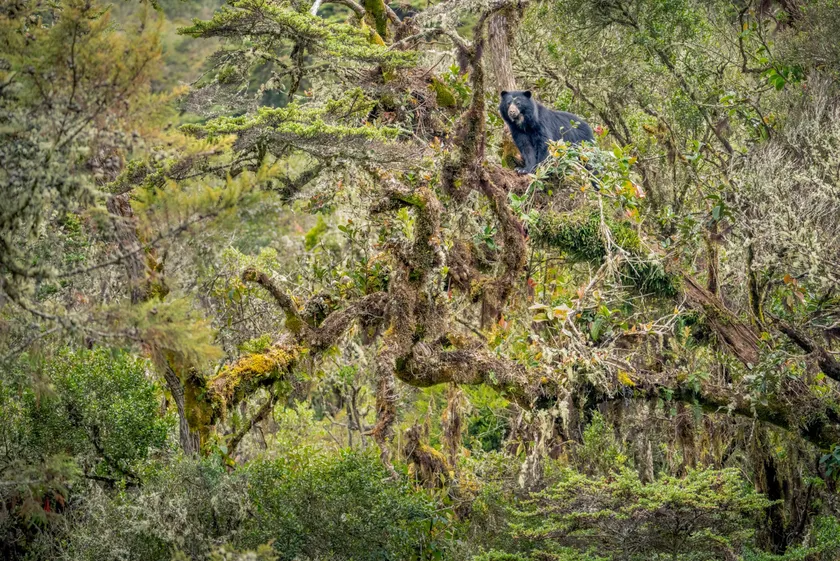
FOR PHOTOGRAPHERS
ANDEAN BEAR FIELD GUIDE
Pick a topic. The first one is open.
Where to look
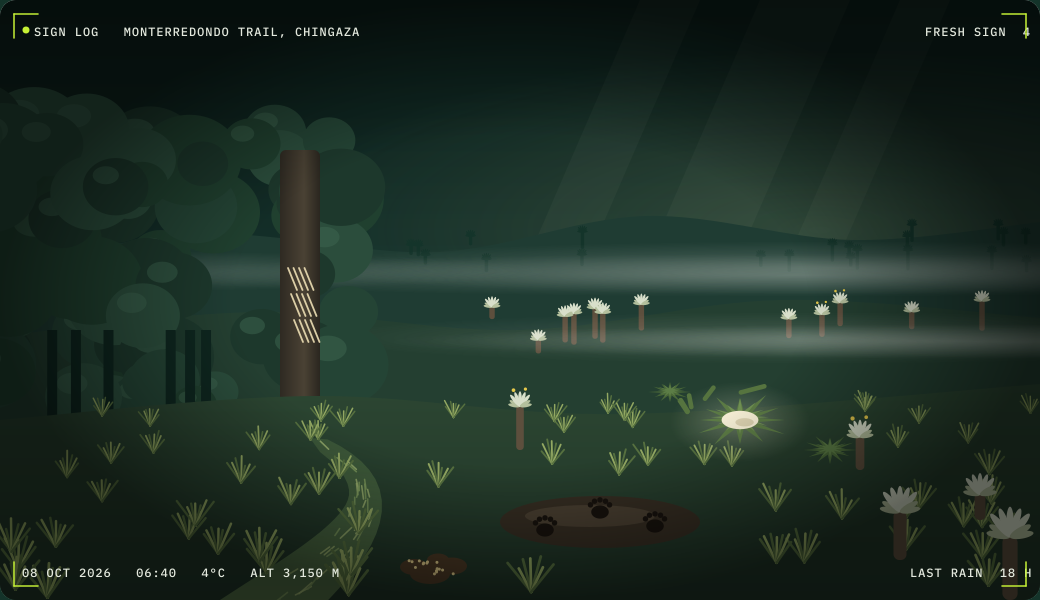
Most days you'll find where a bear has been before you see the bear. Guides read fresh sign to know which trails, slopes and forest edges are in use this week. Learn these five and you'll know what your guide is looking for.
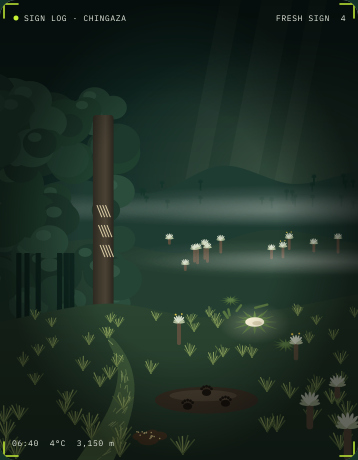
Bromeliads ripped open
Bears tear spiny achupallas apart to eat the soft white base. A pale, wet heart means hours ago; brown and dry means days.
Trail edges, wet ground
Prints show five toes and a broad pad, a bit like a wide human foot. After rain, sharp edges mean a bear passed this morning.
On trails and ridges
Full of plant fibre and fruit seeds, often dropped right on the trail. Guides read it for what the bear has been eating, and where.
Trunks at the forest edge
Bears climb to feed and rest, and leave long scratches on the bark. Fresh marks show pale wood; old ones darken and heal over.
Through grass and chusque
Bears reuse the same paths between forest and páramo, pressing tunnels through grass and bamboo. Your guide watches them from a distance.
Bring a scope or binoculars
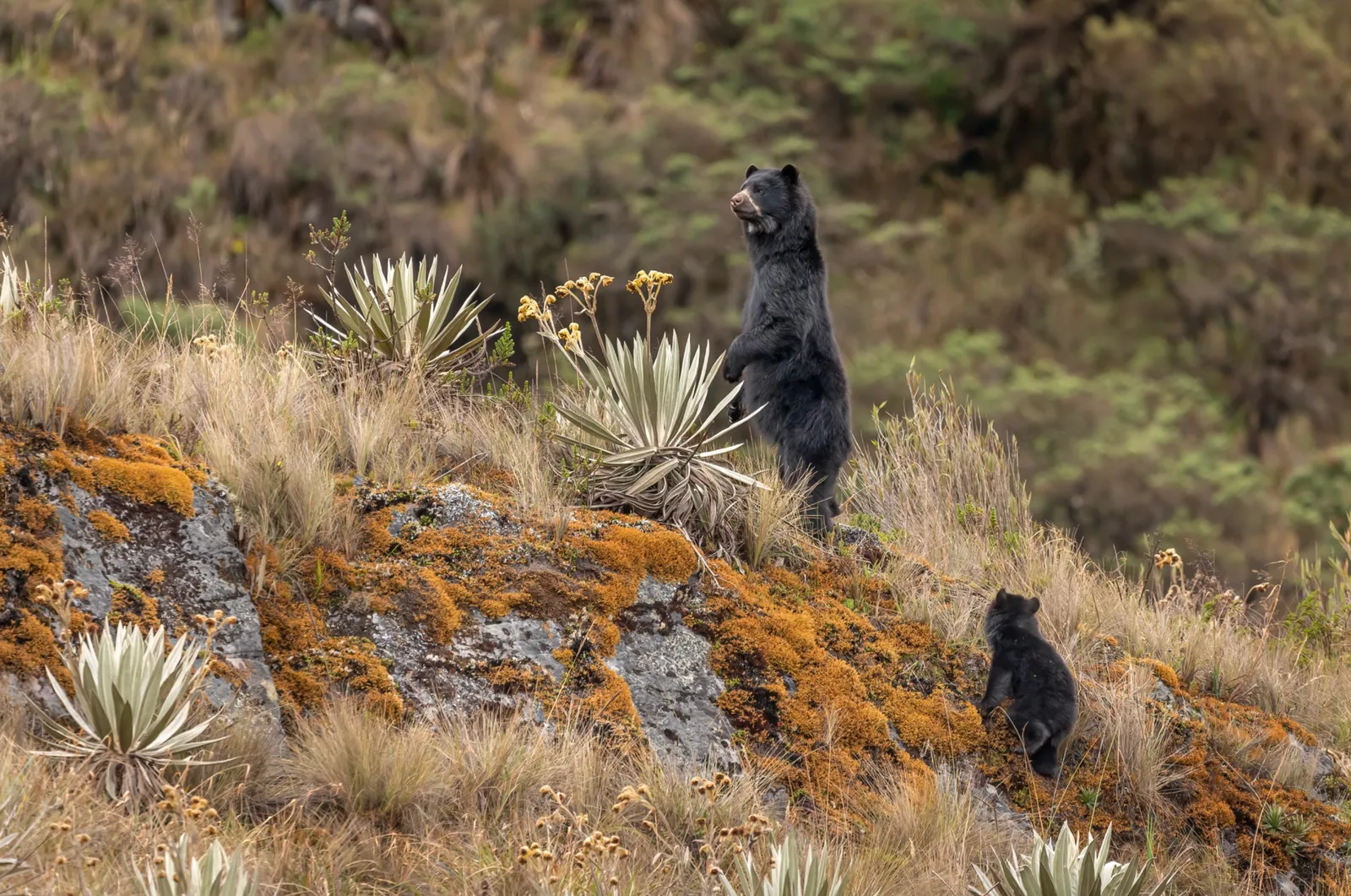
Many bears are seen across a valley, some much closer. A guide's scope turns a dark dot into a bear.
Go early
Bears feed most between 6 and 10 am, and less in strong sun.
Never approach a bear
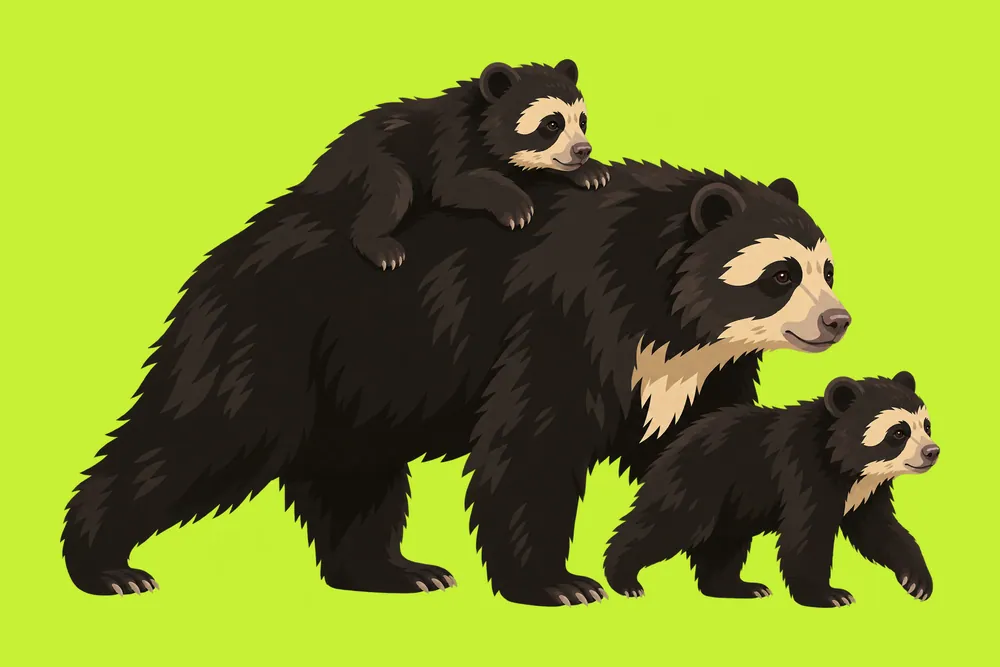
A mother with cubs needs space. Stay back and stay with your guide.
WHAT ARE YOU LOOKING AT?
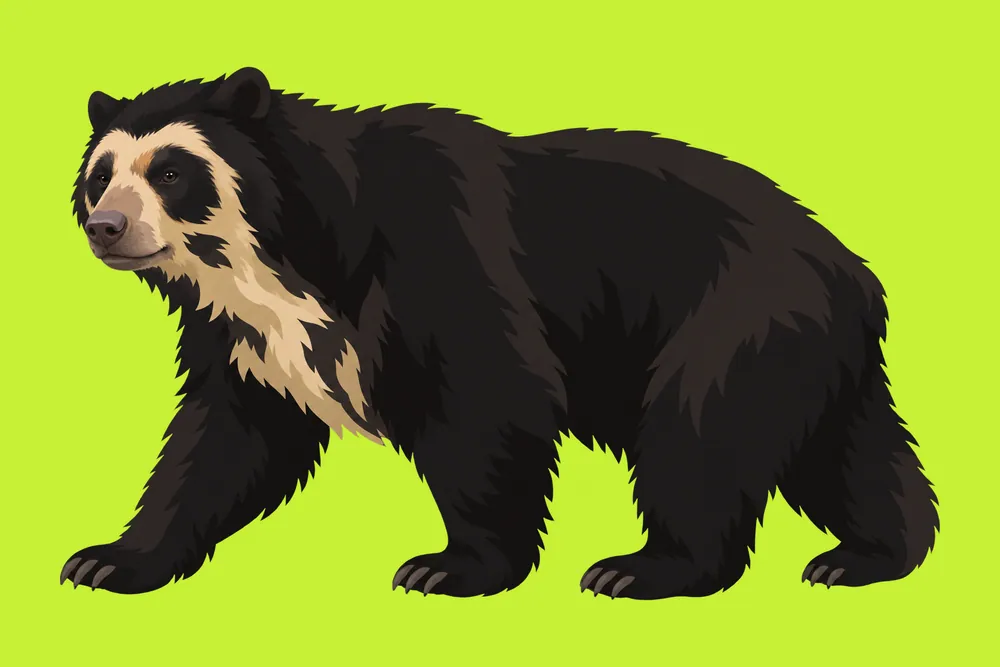
There is one bear in South America. In Chingaza you'll often see it far off, though some cross close by. Here's how to tell a bear from the dark shapes that fool everyone at first.
Tremarctos ornatus · also called the spectacled bear
Same species · usually one or two cubs
The most common false alarm
ANDEAN BEAR ETHICS
Rarely. They are shy, mostly plant-eating bears that avoid people. Keep your distance, never feed one, and never get between a mother and her cubs.
Drive slowly inside the park. Bears are hit on mountain roads, and the limit is 40 km/h.
No. Drones are banned in Chingaza, and they disturb bears and condors. Use a long lens instead.
Never leave the trail to get closer. Páramo plants take decades to grow back.
FIELD TIP FROM LYFERR
Most mornings you will find fresh sign, not a bear. When one shows, it is usually across the valley, so bring binoculars and give it time.
57 bears
told apart by their face markings in one Chingaza camera trap study
1
bear species lives in South America
90%
of their diet is plants
2
cubs in a typical litter
Ukumari
its name in Quechua, still used in the southern Andes
Species expert program
Lyferr is new, so we don't rank guides on trips booked here yet. We start by inviting guides with years of work built around Andean bears, and we review each one before the badge goes on their profile.
Years guiding Andean bears
Several years of tours focused on this species, not wildlife tours in general.
Work we can check
Traveller references and a public record of their work, such as eBird, iNaturalist or published photos, reviewed with Lyferr on a video call.
Earned species by species
A guide can hold several badges. Each one is reviewed on its own.
How a guide becomes a Founding Expert
Founding badges rest on each guide's years of work with this species, checked by Lyferr. As trips are booked and reviewed on Lyferr, that record shows on the guide's profile next to the badge.
No guide can promise a sighting. The badge shows years of focused work with this species, reviewed by Lyferr.
Apply as an Andean bear ExpertFAQ
Chingaza National Park, about 2 hours from Bogotá, especially the Monterredondo and Piedras Gordas sectors on the La Calera side. Even there sightings are uncommon, so go with an authorised local guide and plan two or three days.
All answers stay in the HTML (expanded for crawlers); only the display collapses.
Still have a question?Ask Lyferr →

Who wrote this
Wildlife photographer and guide who grew up in Guanacaste, and a finalist in the Sony World Photography Awards and Wildlife Photographer of the Year. Lior has spent years finding and photographing Andean bears in Colombia. This guide is what he tells friends before they go.