 Multi-day trip
From$5,150per person
· 7 min read · Updated November 2026
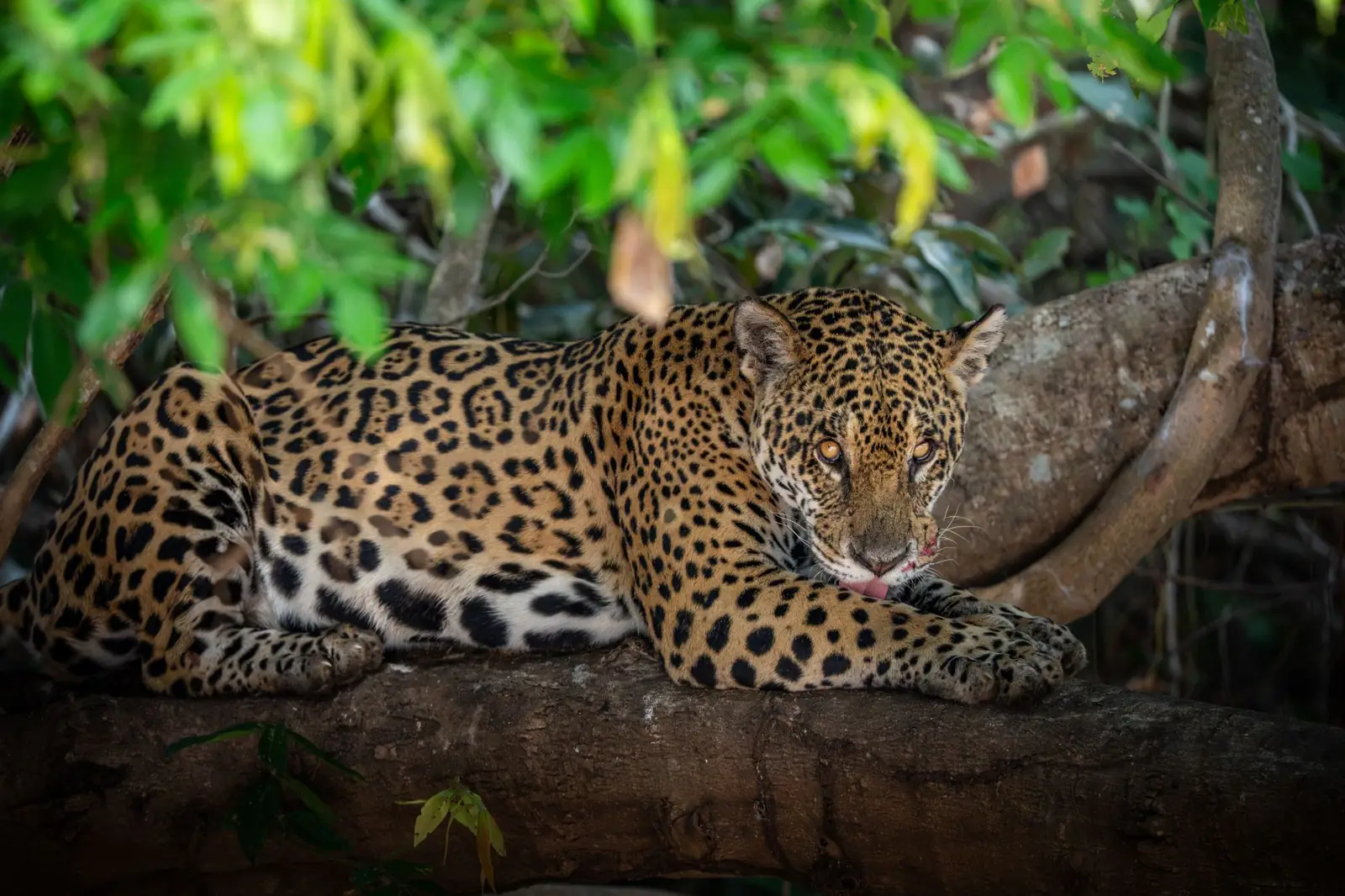
The best place in the world to see a wild jaguar is Brazil's northern Pantanal, around Porto Jofre at the end of the Transpantaneira. Go in the dry season, July to October, when low water pulls jaguars onto the riverbanks. Two or three days on the boats with a specialist guide give you a strong chance.
By Lior, wildlife photographer and guide from Guanacaste
WHERE
Porto Jofre, at the end of the Transpantaneira
Boat trips on the Cuiabá river and its side channels, northern Pantanal, Mato Grosso
WHEN
Dry season, July to October
Low water pulls jaguars onto the riverbanks. Boats go out at first light and again in the afternoon
HOW LIKELY?
Good in the dry season
Two or three days of boat trips with a specialist guide give you a strong chance. A single day is a gamble.
ARE THEY ENDANGERED?
Near threatened
Habitat loss, wildfires and conflict with cattle ranches are the main threats.
The honest answer
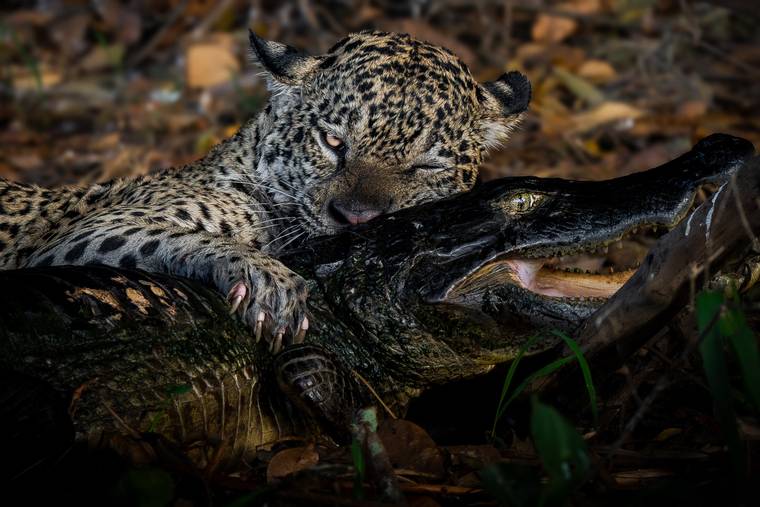
Around Porto Jofre jaguars rest, hunt and swim along the riverbanks, and boats can watch from the water. It is still a wild animal on its own schedule: some days bring several, some none. Three things change the odds: how long you stay, when you go and who you go with.
A day trip from Cuiabá
Porto Jofre is 4 to 5 hours from Cuiabá on a dirt road, so a day trip leaves little time on the river. Most people who try it see birds and caimans, not a jaguar.
Compare day trips2 to 4 nights at Porto Jofre
Best chanceStaying at Porto Jofre puts you on the water at dawn and again in the afternoon, day after day. In the dry season that is what gives you a strong chance, never a guarantee.
Compare multi-day tripsA specialist guide
Makes the differenceGuides who track where each jaguar is hunting this week, and keep in touch with other boats, find far more cats than a boat on its own. That's what the Jaguar Expert badge recognises.
Find a Jaguar ExpertWant a photo? A long lens and a low boat seat make the shot: jaguars are often on the bank right at water level.
Photography guideJAGUAR TOURS FROM LOCAL GUIDES AND OPERATORS
Multi-day trips give you several mornings on the river from Porto Jofre. Short on time? Switch to day tours.
Multi-day tripFrom$5,150per person
Showing 1 jaguar trip from local guides.
See jaguar tripsNot ranked. Nobody pays to appear higher. How listings work
full refund up to 6 months before trips and 7 days before day tours, half until 60 days or 48 h before, on every booking made through Lyferr. Lyferr's commission and the card fee are not refunded.
secure checkout on Lyferr, the rest paid before your tour
every listing shows its maximum group size
guide's name arrives with your confirmation and you message them in Lyferr
only travellers who booked can review
HOW BOOKING WORKS
Pick a tour or trip on Lyferr
Choose your date and pay the 25% deposit on Lyferr
The guide confirms within 24 h. You message them in Lyferr
Prices are set by each guide. The price you see is final. Lyferr's commission comes out of the guide's price, not on top. Each card opens the tour's page on Lyferr.
All tours in Brazil →LYFERR IS A MARKETPLACE
We don't run tours. Independent local guides and operators list them, we vet every one and show each record openly, and you reserve through Lyferr's secure checkout.
How it worksJAGUAR GUIDES
We invite guides with years of work built around jaguars and review each one before they're listed. The first jaguar guides show here as they join.
Are you a jaguar guide?
Species expert program
Lyferr is new, so we don't rank guides on trips booked here yet. We start by inviting guides with years of work built around jaguars, and we review each one before the badge goes on their profile.
Years guiding jaguars
Several years of tours focused on this species, not wildlife tours in general.
Work we can check
Traveller references and a public record of their work, such as eBird, iNaturalist or published photos, reviewed with Lyferr on a video call.
Earned species by species
A guide can hold several badges. Each one is reviewed on its own.
How a guide becomes a Founding Expert
Founding badges rest on each guide's years of work with this species, checked by Lyferr. As trips are booked and reviewed on Lyferr, that record shows on the guide's profile next to the badge.
No guide can promise a sighting. The badge shows years of focused work with this species, reviewed by Lyferr.
Apply as a Jaguar ExpertWhat travellers say
No reviews yet. Verified Lyferr reviews appear here as travellers complete tours.
We show ratings and link to the original reviews; we never copy review text from other sites. Only travellers who booked can leave one.
WHERE AND WHEN
TOWN BY TOWN
Yes. This is the base for jaguar boat trips. In the dry season boats leave from here every morning and afternoon.
Sometimes. The lodges along the road are great for birds, caimans and capybaras. Jaguars are seen, but far less than on Porto Jofre's rivers.
Not in town. Poconé is where the Transpantaneira starts. Porto Jofre is about 145 km further south on the dirt road.
Not in the city. Cuiabá has the nearest airport. Porto Jofre is 4 to 5 hours away by road; plan at least two nights there.
No. Fly to Cuiabá, about 2 to 3 hours, then drive the Transpantaneira to Porto Jofre.
1 of 5

FOR PHOTOGRAPHERS
JAGUAR FIELD GUIDE
Pick a topic. The first one is open.
Where to look
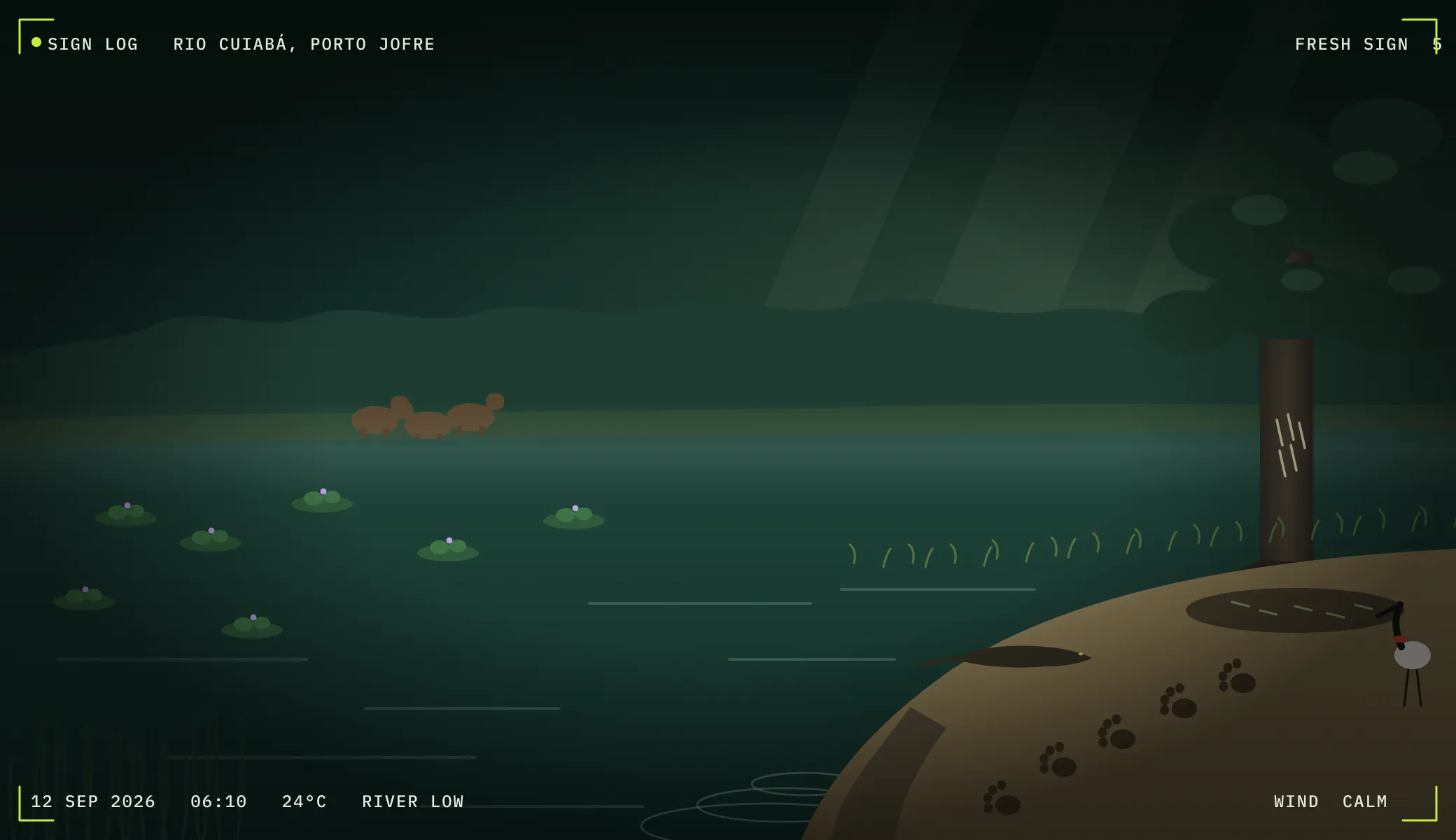
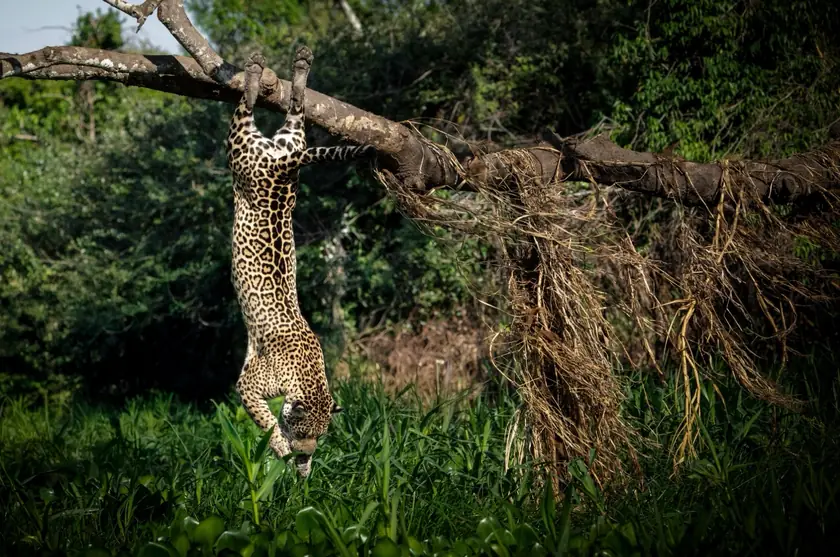
In the dry season jaguars hunt along the rivers around Porto Jofre. Guides read the banks from the boat to know where a cat has been this week. Learn these five and you'll know what your guide is looking for.
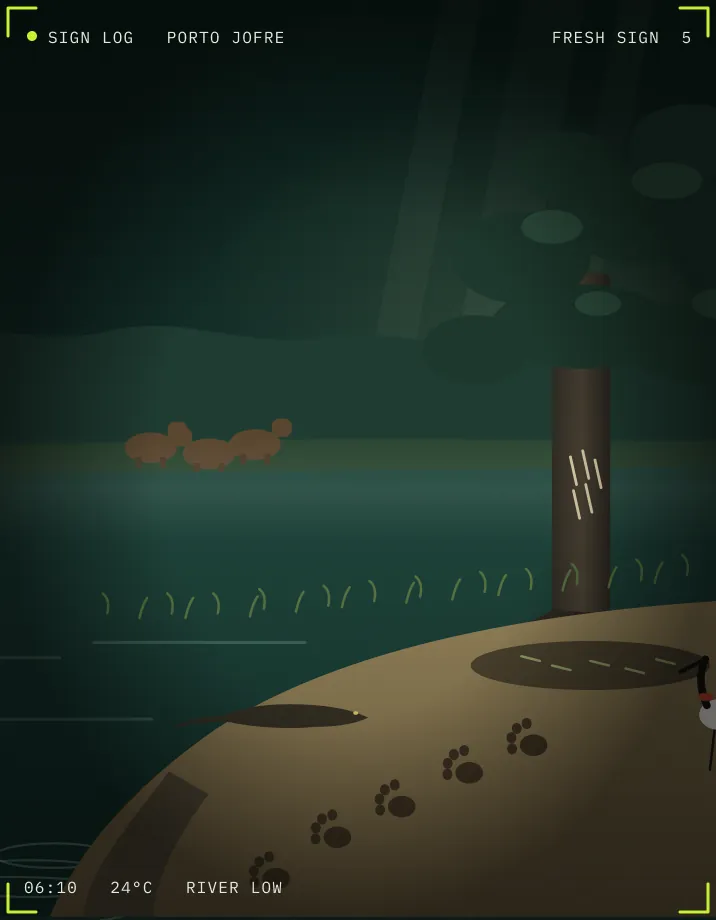
Sand bars and banks
Round prints as wide as your hand, with four toes and no claws showing. Crisp edges on wet sand mean a jaguar walked here this morning.
Shade on the bank
Jaguars rest through the heat in the shade at the water’s edge. A flattened patch under a tree tells your guide which banks a cat is using.
Open banks
Capybaras bark and freeze when a jaguar is near, and caimans slip into the water. Guides cut the engine and watch where they are looking.
Trunks above the bank
Jaguars stretch and scratch the same trees to mark their range. Fresh scratches show pale wood; old ones darken.
The water’s edge
Jaguars swim well and cross rivers to hunt. A wet slide down the bank and tracks that stop at the water mean it crossed here.
Go out at first light
Jaguars move most in the cool early morning and late afternoon. At midday they rest in the shade.
Scan the banks, not the trees
Most jaguars are seen on the bank at water level. Look for a gold shape against the sand.
Never ask the boat to push closer
When several boats share a sighting, keep back and leave the cat room to move along the bank.
WHAT ARE YOU LOOKING AT?
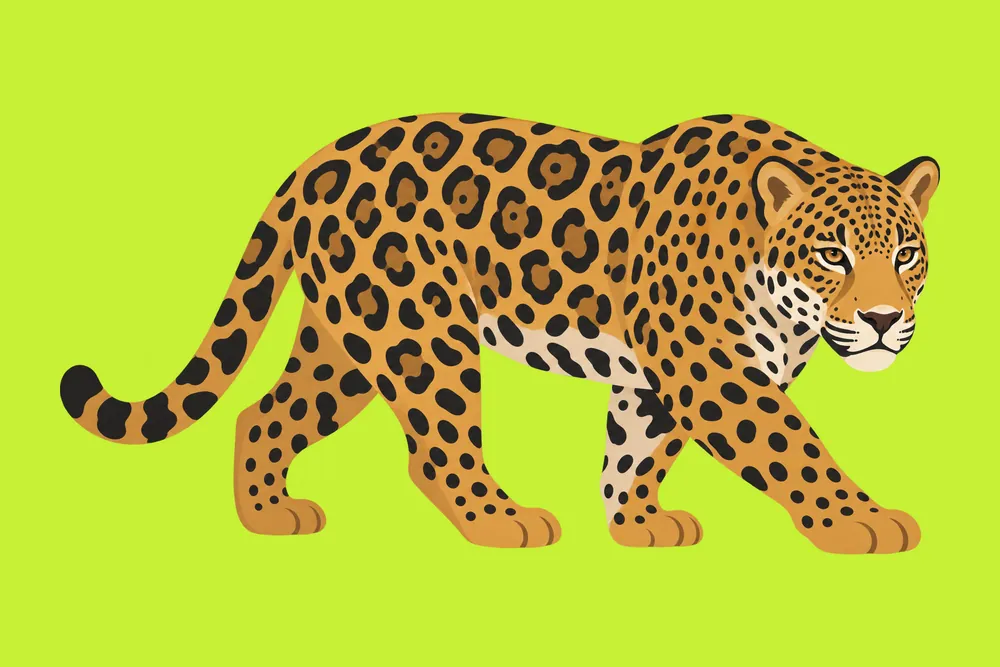
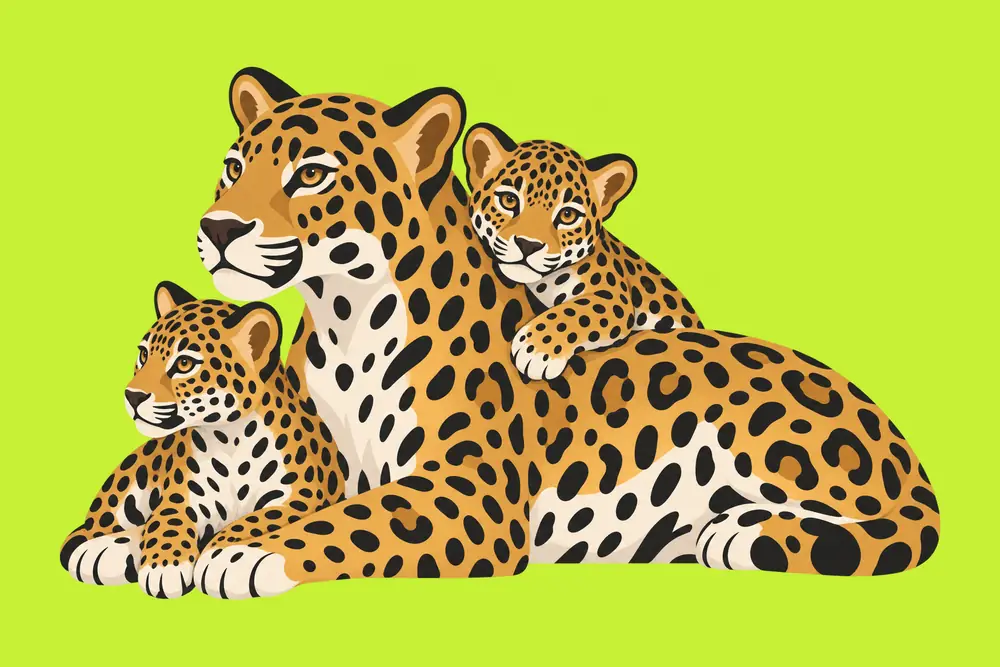
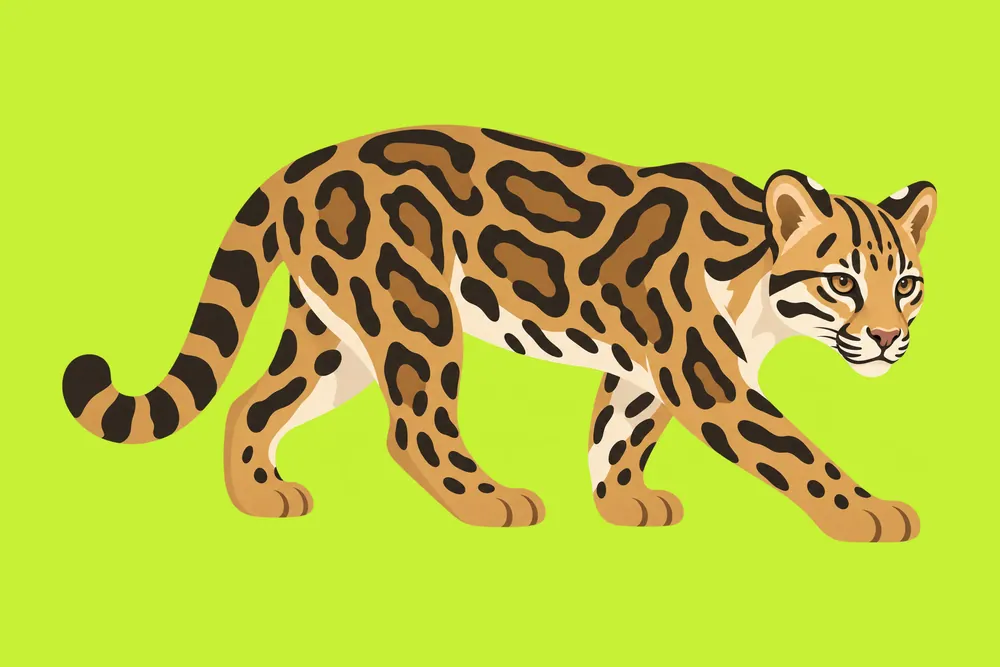
Around Porto Jofre most jaguars are seen resting or walking on the riverbank, often close to the boat. Here's how to tell what you're looking at.
Panthera onca · the biggest cat in the Americas
Same species · usually one or two cubs
Leopardus pardalis · a much smaller spotted cat
JAGUAR ETHICS
Very rarely. Jaguars here are used to boats and mostly ignore them. Stay in the boat, keep your voice low and never ask the pilot to push closer.
When several boats share a sighting, keep back and leave the cat room to move along the bank.
No. A drone stresses the cat and the birds around it, and spoils the sighting for every other boat. Use a long lens instead.
Never feed or call a jaguar, and never get out of the boat on a bank where one is resting.
FIELD TIP FROM LYFERR
Watch the bank at water level, not the trees. A jaguar lying in the shade looks like a log until it lifts its head.
3rd
biggest cat in the world, after the tiger and the lion
1
big cat in the Americas
100 kg
and more for some Pantanal males
Swimmers
they cross rivers and hunt caimans in the water
Onça-pintada
its name in Portuguese
Species expert program
Lyferr is new, so we don't rank guides on trips booked here yet. We start by inviting guides with years of work built around jaguars, and we review each one before the badge goes on their profile.
Years guiding jaguars
Several years of tours focused on this species, not wildlife tours in general.
Work we can check
Traveller references and a public record of their work, such as eBird, iNaturalist or published photos, reviewed with Lyferr on a video call.
Earned species by species
A guide can hold several badges. Each one is reviewed on its own.
How a guide becomes a Founding Expert
Founding badges rest on each guide's years of work with this species, checked by Lyferr. As trips are booked and reviewed on Lyferr, that record shows on the guide's profile next to the badge.
No guide can promise a sighting. The badge shows years of focused work with this species, reviewed by Lyferr.
Apply as a Jaguar ExpertFAQ
The northern Pantanal in Brazil, on the rivers around Porto Jofre at the end of the Transpantaneira road. In the dry season, July to October, jaguars hunt along the riverbanks and are watched from boats. Plan two to four nights and go with a specialist guide.
July to October, the dry season. The water is low, so jaguars hunt caimans and capybaras along the riverbanks. In the wet season, roughly December to March, much of the area floods and boat trips from Porto Jofre are limited.
Yes, in Corcovado, Tortuguero and the Talamanca mountains, but they are very rarely seen there. The Pantanal is where most people see their first jaguar.
All answers stay in the HTML (expanded for crawlers); only the display collapses.
Still have a question?Ask Lyferr →

Who wrote this
Wildlife photographer and guide who grew up in Guanacaste, and a finalist in the Sony World Photography Awards and Wildlife Photographer of the Year. Lior wrote this guide with Lyferr’s founding jaguar guide in the Pantanal.